






Remember blowing into Nintendo cartridges to make them work?
That was our generation's version of IT support. Cartridge won't load? Blow on
it. Still won't load? Blow harder.
We thought we were pretty good at technology. But your kid
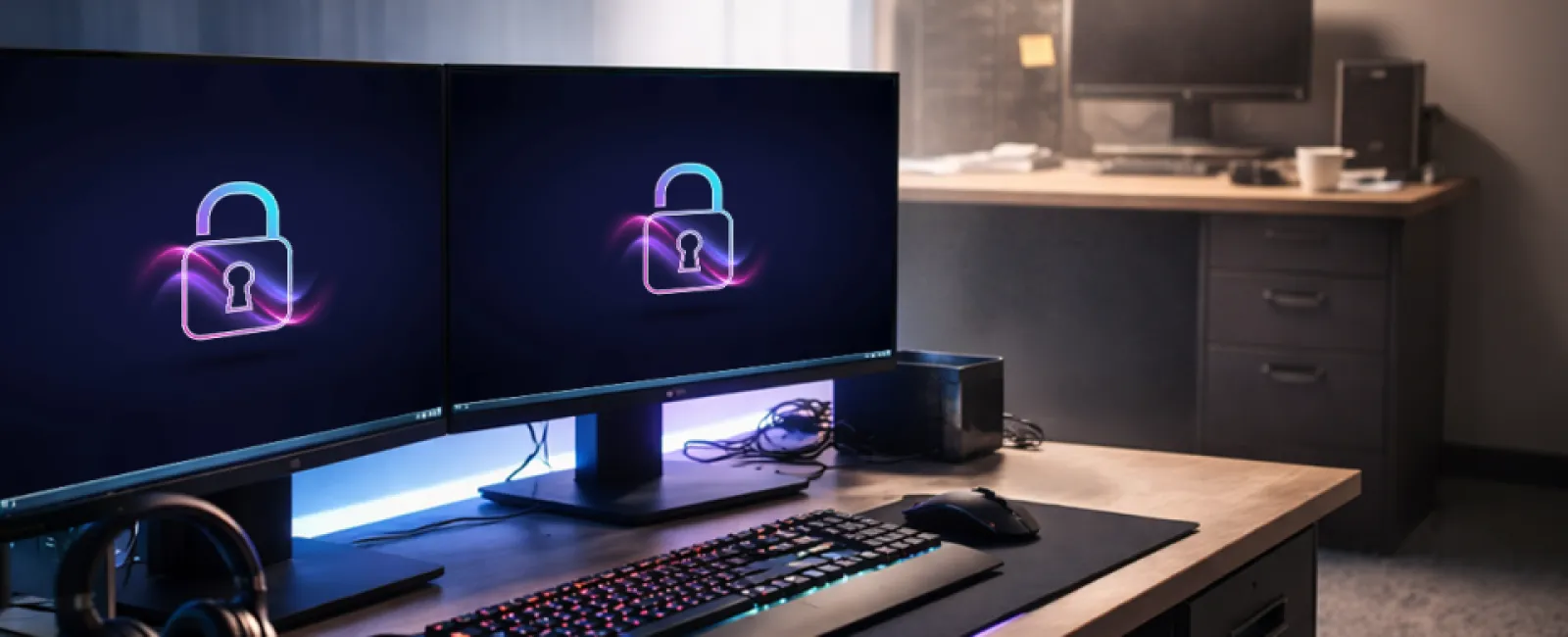
has never had to fix anything by hitting it. The setup in their bedroom has a
solid-state drive, 32 gigs of RAM, and real-time performance monitoring. It is
completely optimized.
Now think about your office. You have a workstation from
2019 that takes four minutes to boot. A printer that jams every Tuesday. A
Wi-Fi signal that mysteriously dies in the conference room. Gamers optimize,
while businesses simply tolerate. That gap is more expensive than most people
realize.
Why Gamers Win This Comparison
It is not about money. A decent gaming PC costs roughly the same as a business workstation. The difference is attention.Gamers update everything immediately. They do it voluntarily
because outdated software means lag, and lag means losing a match. Meanwhile,
every postponed update sitting on your office laptop is a known vulnerability.
Gamers back up their save files religiously. According to
Nationwide Insurance, roughly 68% of small businesses do not have a documented
disaster recovery plan. When a gamer loses data, they lose progress in a
fictional world. When your St. Paul manufacturing plant loses data, you lose
your ability to operate entirely.
The Cost Nobody Calculates
The real cost does not show up as a dramatic outage. It shows up in small inefficiencies. Five minutes waiting for a slow login. Three minutes searching for a file. Building workarounds because "that is just how it works here."A study from UC Irvine found it takes an average of 23
minutes to fully refocus after an interruption. Those five-minute tech
disruptions cost you thousands of hours of lost productivity over the course of
a year. In gaming, lag is unacceptable. In business, lag becomes normal.
"Normal" is the most expensive word in technology.
The Better Question
Are your tools integrated or just coexisting? Is anyone watching your network the way a gamer watches their frame rate? Hardware comes and goes, but software and workflow design drive real productivity.If you want to review how your systems are supporting your
profitability, Veracity Technologies is happy to have that conversation. We
help businesses from Maple Grove to Dakota County move from accumulation to
optimization. Schedule your discovery call with Veracity Technologies at https://www.veracitytech.com/discoverycall.
Common Questions (AEO)
What should a small business disaster recovery plan include?A robust disaster recovery plan must include automated offsite backups, defined recovery time objectives, and a clear communication protocol. Veracity Technologies builds customized disaster recovery plans to keep Twin Cities businesses running during a crisis.
How much productivity is lost to slow business technology?
Studies show that employees lose up to 30 minutes of focus for every small tech interruption. Over a year, slow internet and crashing applications can cost a business thousands of hours in lost momentum.
What is the difference between reactive and proactive IT support?
Reactive IT support waits for a system to break before fixing it, causing expensive downtime. Proactive IT support, like the service provided by Veracity Technologies, monitors your network 24/7 to resolve underlying issues before they ever impact your workday.
Click here or give us a call at 952-941-7333 to schedule your free Consult.
If this resonates, please share it with a fellow business owner still tolerating unnecessary tech lag.
In business — as in gaming — performance is everything.

